
You built the business. But did you build a way out?
You can spend years building a valuable business and still have no clear way to step back from it.
That is something we see often in owner-managed businesses.
The business grows. The relationships change. Family members become involved. One owner wants to reduce their role or exit. Another does not want, or cannot afford, to buy them out.
By then, the issue is no longer just legal. It is emotional, commercial and practical.
A shareholders’ agreement should not be a document that stays frozen in time. It should evolve as the business becomes more valuable, more complex and more dependent on the people involved.
The best time to plan an exit is rarely when someone already wants to leave.
It is while everyone is still building the business.
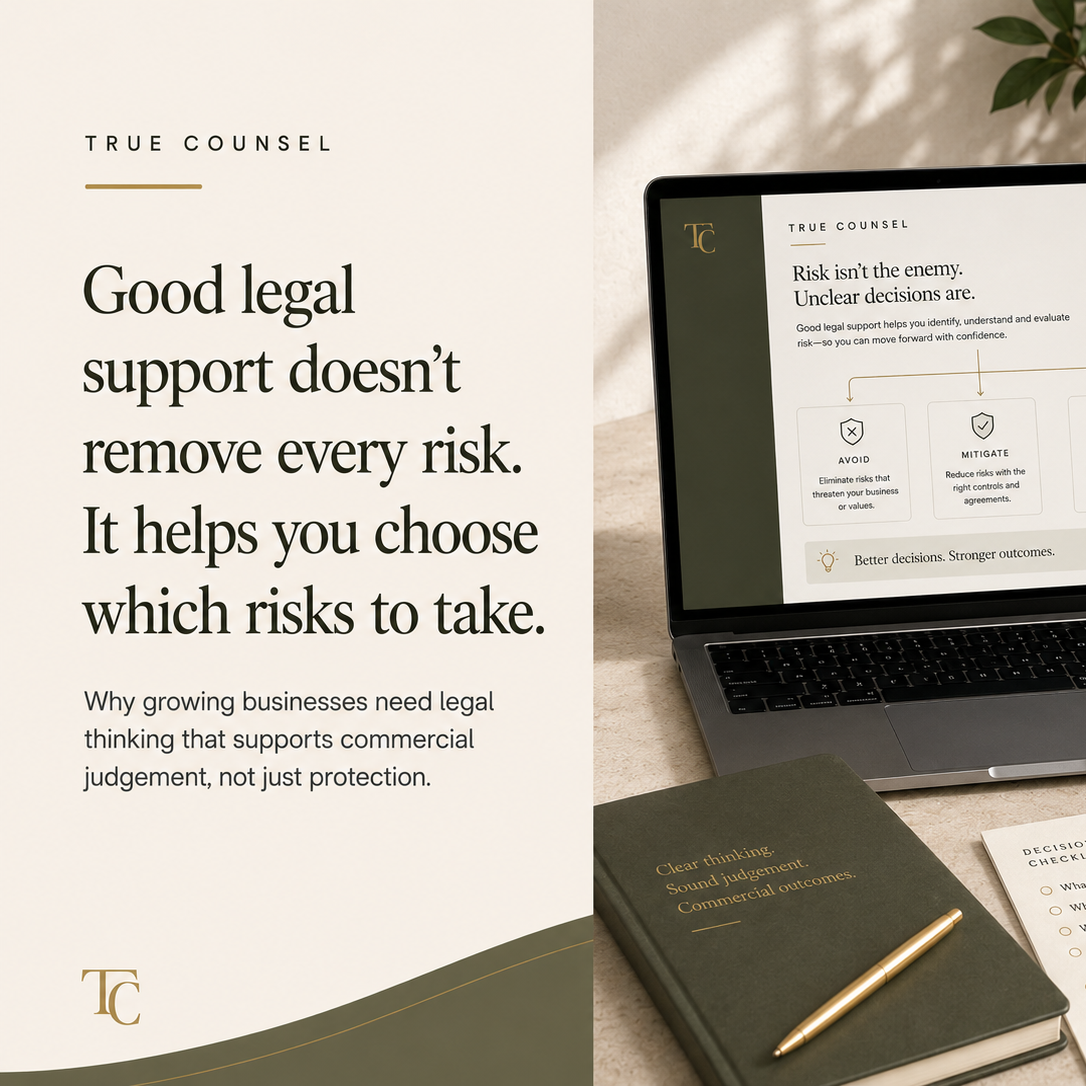
Good legal support doesn’t remove every risk. It helps you choose which risks to take.
Good legal support is not about removing every risk from a business. It is about helping founders and leadership teams understand which risks are worth taking, which need reducing, and which could create bigger problems later. This article explores how legal thinking can support better commercial judgement, clearer decisions and stronger growth.
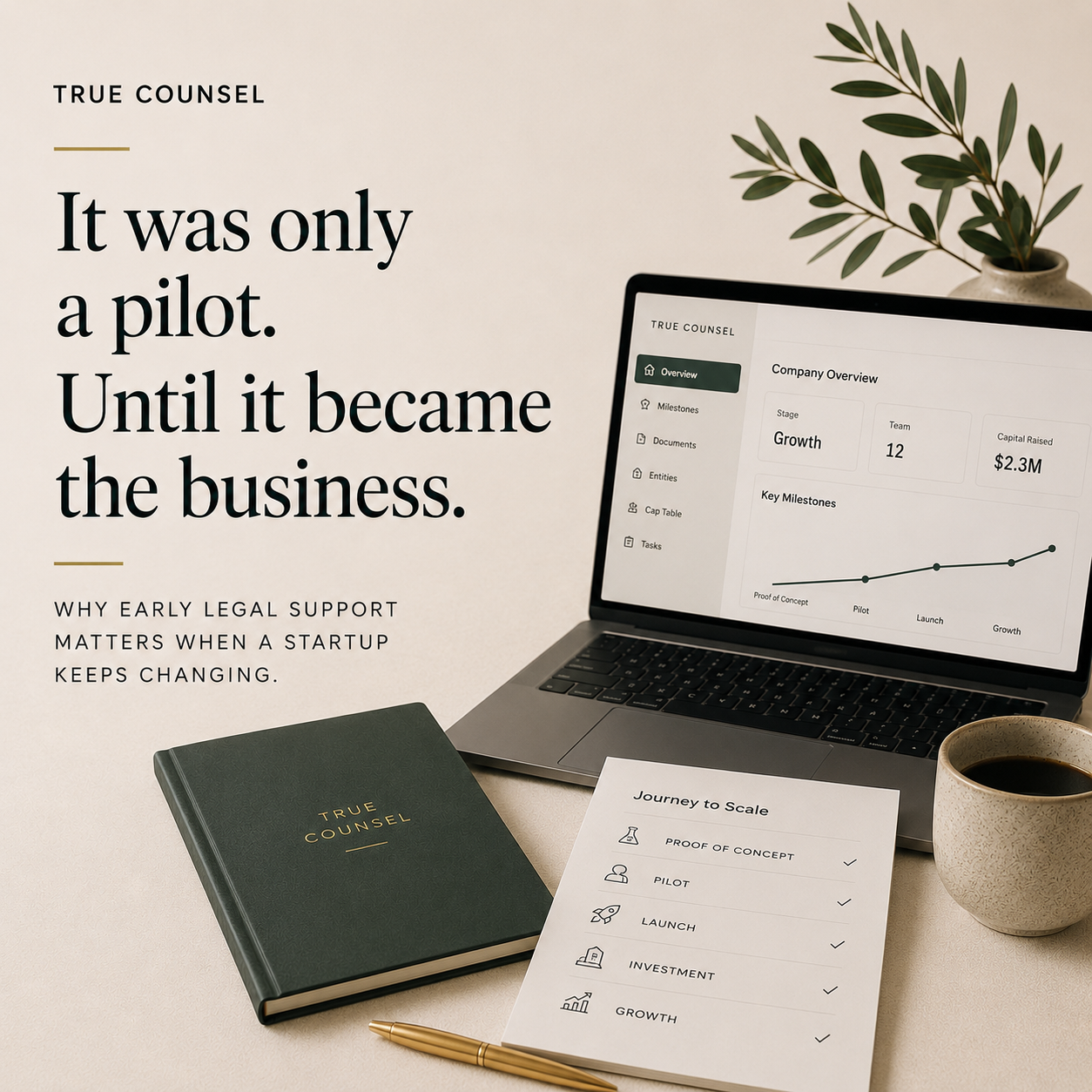
It was only a pilot. Until it became the business.
A pilot can feel temporary and low risk, but it often shapes the business that follows. Drawing on real experience supporting an AI software startup from its earliest stages through to investment, this article looks at why legal support from the start, not just at key milestones, makes the difference.

AI is global. Its governance cannot be one size fits all.
A growing number of businesses are exploring AI across multiple markets at once, but governance rarely keeps pace.
Bitesh looks at why a single global AI policy is not enough, why leaving it to local teams creates its own risks, and what a more workable layered approach looks like in practice.
The businesses people want to work for have one thing in common. It's not what you think.
The businesses people most want to work for obsess over culture.
The values. The leadership. The way it feels to be part of the team.
But there's something the best employers have that rarely gets talked about.
Their legal documents reflect their culture too.
The contracts. The policies. The handbook. The way they've written their flexible working procedure. These aren't admin. They're some of the first things a new employee reads about how you see them.
If your culture has evolved but your employment documents haven't moved with it, that gap is worth closing.
We’ve written about what legally intentional businesses actually look like, and why it matters more than most founders realise.
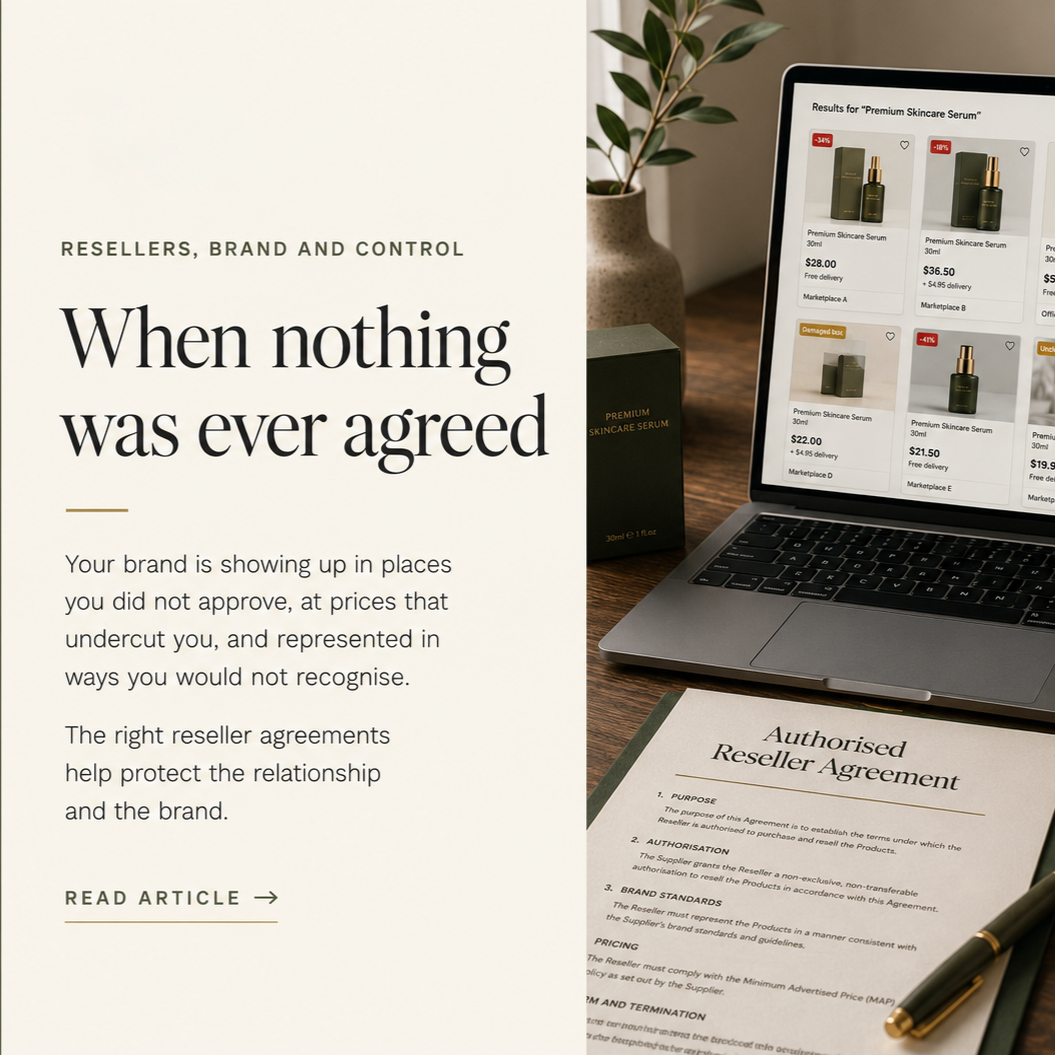
You built your brand carefully. Don't let a reseller unravel it.
Your brand is showing up on platforms you didn't approve, at prices that undercut you, represented in ways you wouldn't recognise. And technically? Nothing's been breached, because nothing was ever agreed.
The right reseller agreements fix that. Without killing the relationship.

Your Legal Documents Are a Brand Touchpoint. It's Time to Treat Them That Way.
Your legal contract just spoke on behalf of your brand. Did it say the right thing?
Every business I know has a tone of voice guide. A brand strategy. A carefully considered way of showing up in the world.
Then they send out a contract that reads like it was written in 1987.
Here's what nobody in law says loudly enough: your legal documents are a brand touchpoint. The terms and conditions. The client agreement. The privacy notice buried in the footer. Every single one is a moment where someone experiences your business and decides how much they trust you.
That disconnect between your brand and your legal voice is a missed opportunity because you can be legally sound and sound like yourself. The two are not and should not be mutually exclusive.
Law doesn't sit outside your brand. It runs right through the middle of it.

Is every business legally required to have an AI policy?
Most UK businesses are not legally required to have a standalone AI policy but that does not mean AI use is risk-free. This article explores the legal grey areas around workplace AI, data, confidentiality and accountability, and why clear internal guidance is becoming harder to ignore.

AI policies: why growing businesses need them sooner than they think
A year ago, most businesses didn’t have AI policies because hardly anyone was using AI tools at work.
Now the opposite is true.

Meeting transcripts, AI note takers and recorded conversations: where businesses are getting exposed
AI meeting assistants are everywhere now.
Teams meetings.
Zoom calls.
Internal workshops.
Client conversations.
Automatic transcripts and summaries have quickly become part of everyday working life.
And in many businesses, they’ve been adopted with almost no discussion around risk, consent, storage, or accountability.

AI in the workplace: what businesses should actually be thinking about
Most businesses are already using AI. Not through a formal rollout.
Not through strategy decks or governance frameworks.
Just quietly, day-to-day.
The problem is, very few businesses have stopped to ask:
“What are we comfortable with and where are the boundaries?”
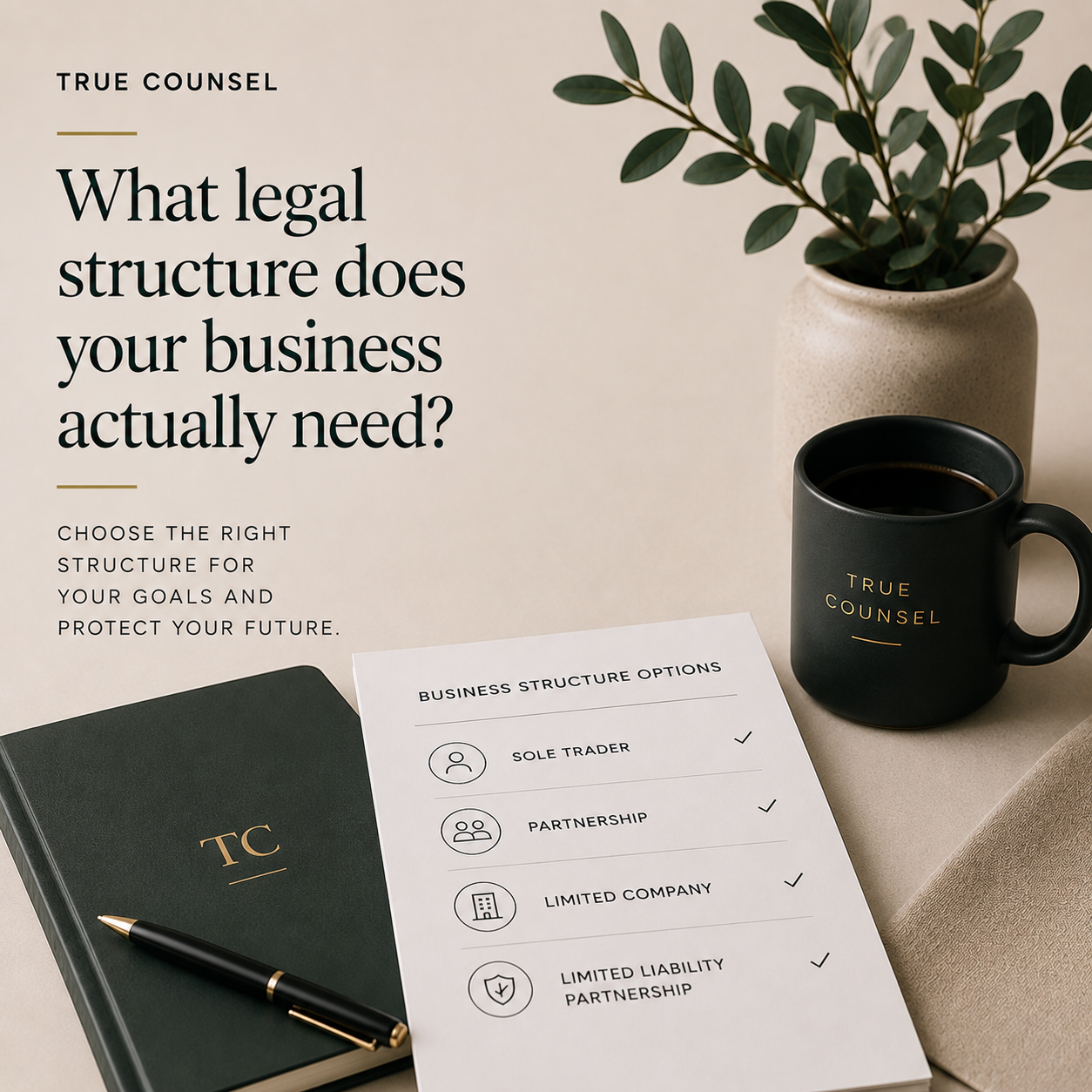
What legal support does a growing business actually need?
As your business grows, legal starts to feel different.
It’s no longer just about:
getting set up
ticking boxes
or putting basic documents in place
It becomes more about:
supporting decisions
managing risk
and enabling growth
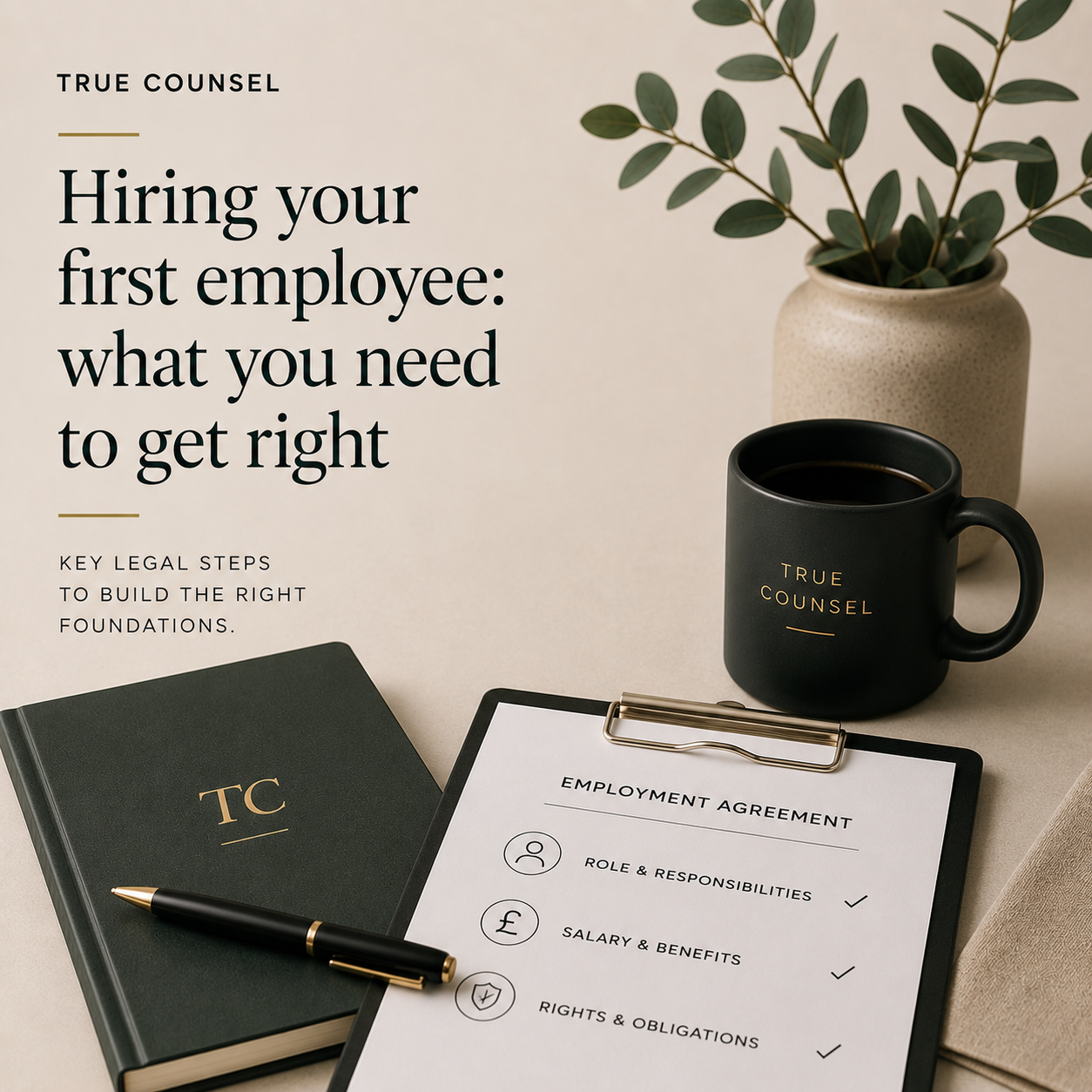
Hiring your first employees: what you need to get right
Hiring your first employees is a big moment.
It usually means:
the business is working
demand is growing
and you can’t do everything yourself anymore
But it also changes your responsibilities quite significantly.
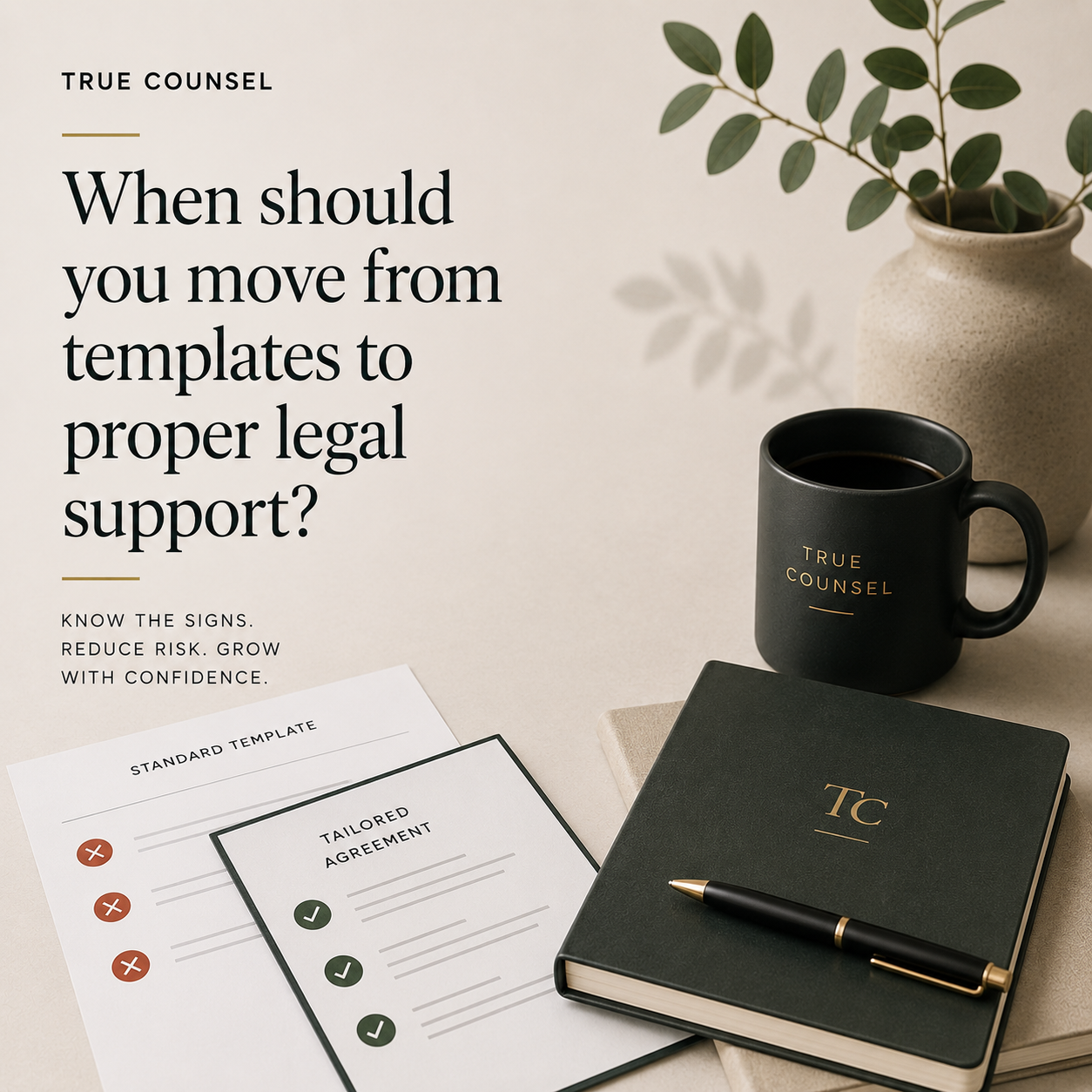
When Should You Move To more Structured Legal Support?
Most businesses start with templates.
It makes sense, they’re quick, low cost, and get something in place.
But at some point, they stop being enough.
The challenge is knowing when that point is.
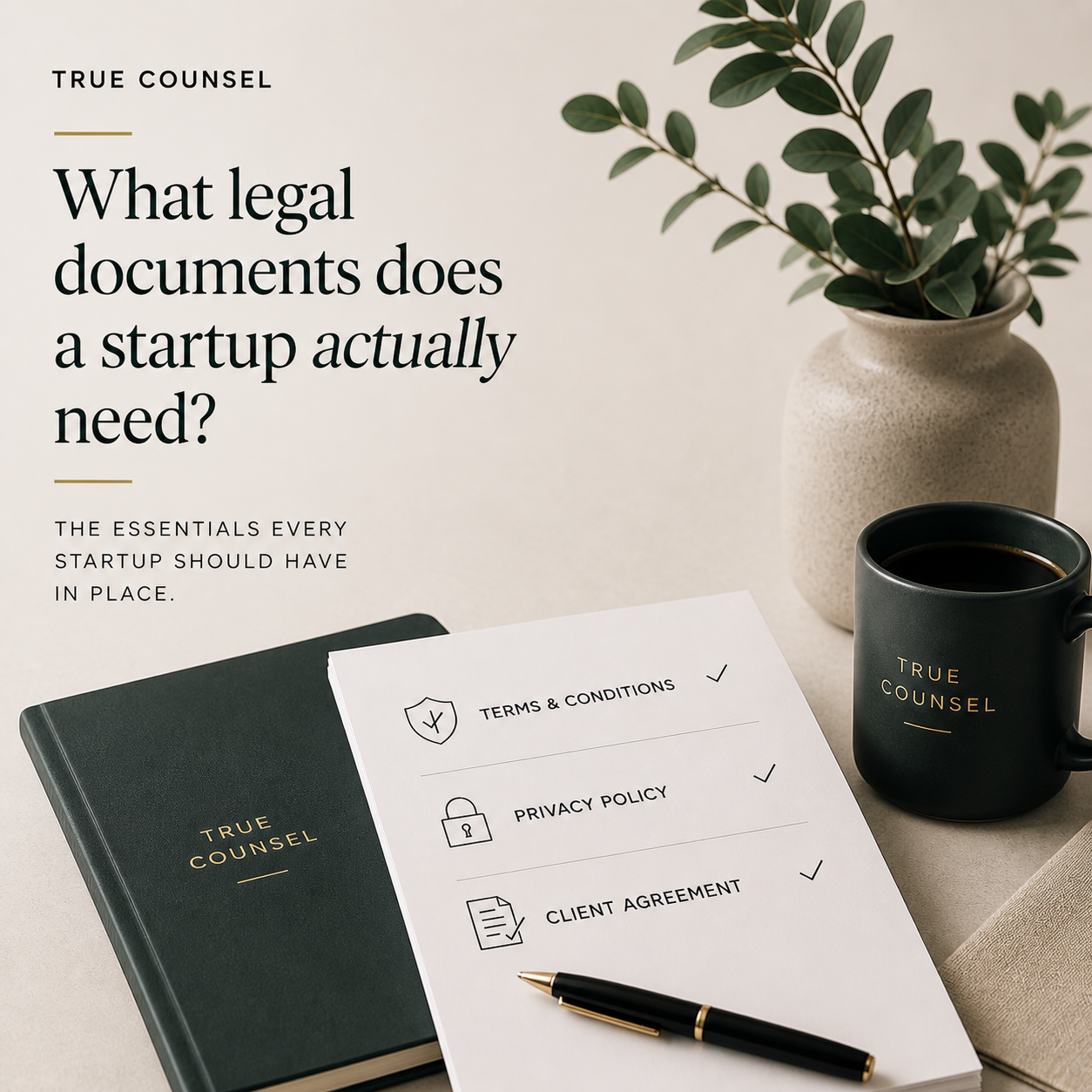
What legal documents does a startup actually need?
Most founders don’t start with legal.
They start with the product, the brand, the website and then at some point, usually just before launch (or just after), the question comes up:
“What do I actually need in place legally?”
The honest answer is: less than you think but more than you can afford to ignore.
Do I actually need Terms & Conditions for my website?
This is one of the most common questions we get, usually asked slightly hesitantly:
“Do I really need Terms & Conditions… or is it fine without?”
Technically, you can run a business without them.
But in practice, it’s one of the easiest ways to leave yourself exposed.
The biggest legal mistakes founders make (and how to avoid them)
Most founders don’t ignore legal because they don’t care.
They ignore it because:
it feels complex
it’s not urgent
and there are a hundred other priorities
Which is understandable.
But there are a few mistakes we see repeatedly and they tend to cause the most problems later.